

A KNX weather station designed for family homes requires measurement technology suitable for residential buildings, straightforward installation, and an ETS application that genuinely simplifies day-to-day project planning.
Windancer 2.0 GPS KNX sec is designed precisely for this application. The mechanical cup anemometer has proven itself in residential construction for many years and ensures reliable on-site weather data collection. At the same time, the revised ETS application, with context help, Smart Linking Ready and an optimised structure, supports efficient parameterisation and commissioning.
The KNX weather station thus combines weather data collection, shading control and protection functions in a compact device for modern residential buildings.


Windancer 2.0 GPS KNX sec: KNX weather station family homes
Revised ETS application and efficient configuration for modern weather-data-based building automation


New ETS application & protection via KNX Secure
Faster project planning, more intuitive parameterisation
With Windancer 2.0 GPS KNX sec, the ETS application has been fundamentally redesigned to make project planning and customisation in day-to-day clearer and more intuitive to use. A new structure within the ETS, semantic mappings and comprehensive context-sensitive help significantly improve navigation and reduce the effort required for parameterisation. Many functions, parameters and relationships can be understood directly within the ETS, without having to constantly switch between the ETS and the manual.
In addition, Windancer 2.0 GPS KNX sec supports the ETS function Smart Linking. This allows communication objects and functions to be found, assigned and linked more quickly.
In addition to the revised ETS application, the weather station also supports KNX Data Secure, thereby enabling encrypted communication within modern KNX systems.
Particularly useful in day-to-day project work: Windancer 2.0 GPS KNX sec features a Live Data Adjustment function for threshold values. Current wind, temperature or brightness values can be adopted directly as new threshold values via a communication object. This simplifies adaptation to the on-site situation and to individual user requirements.


Collecting weather data
What sets the hardware apart
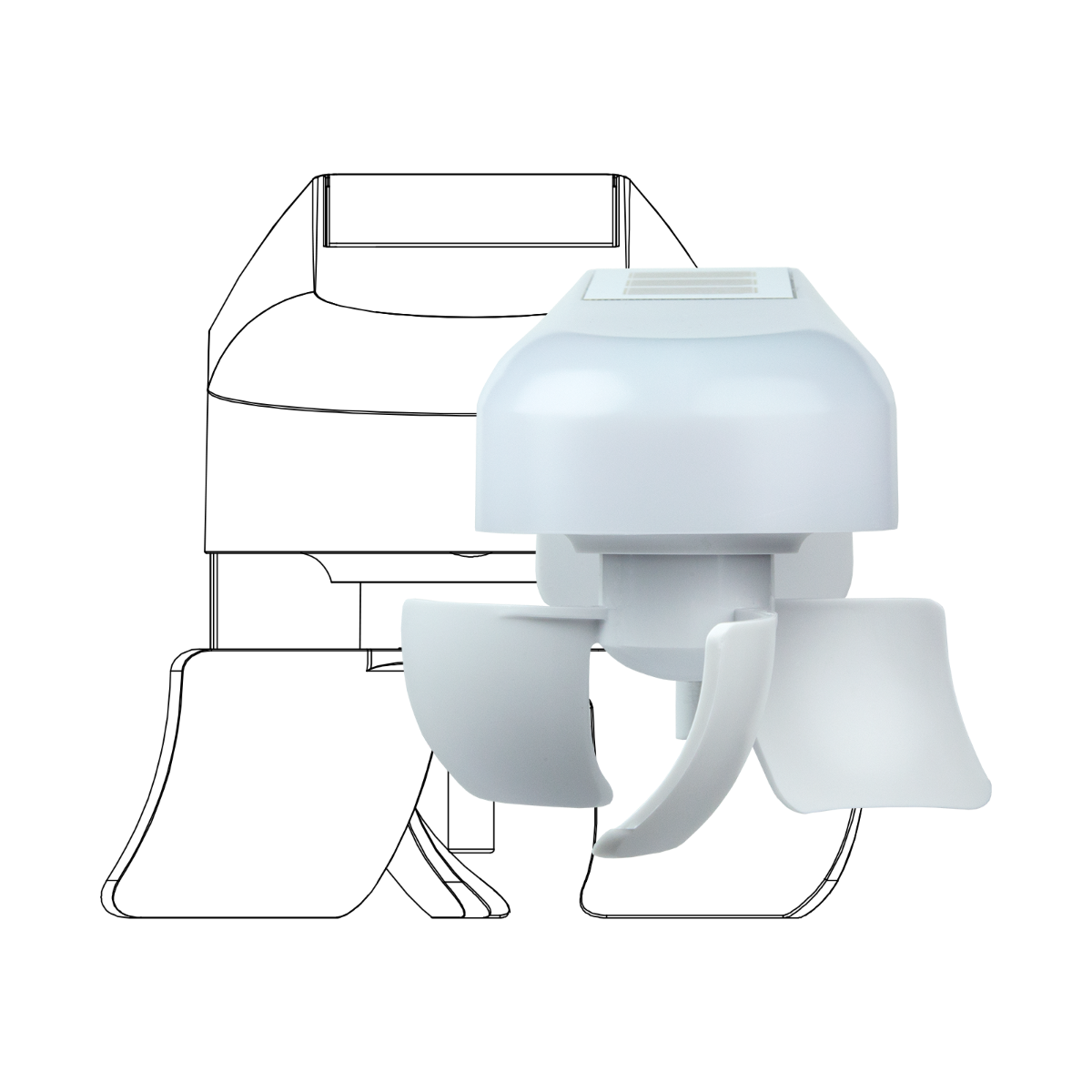
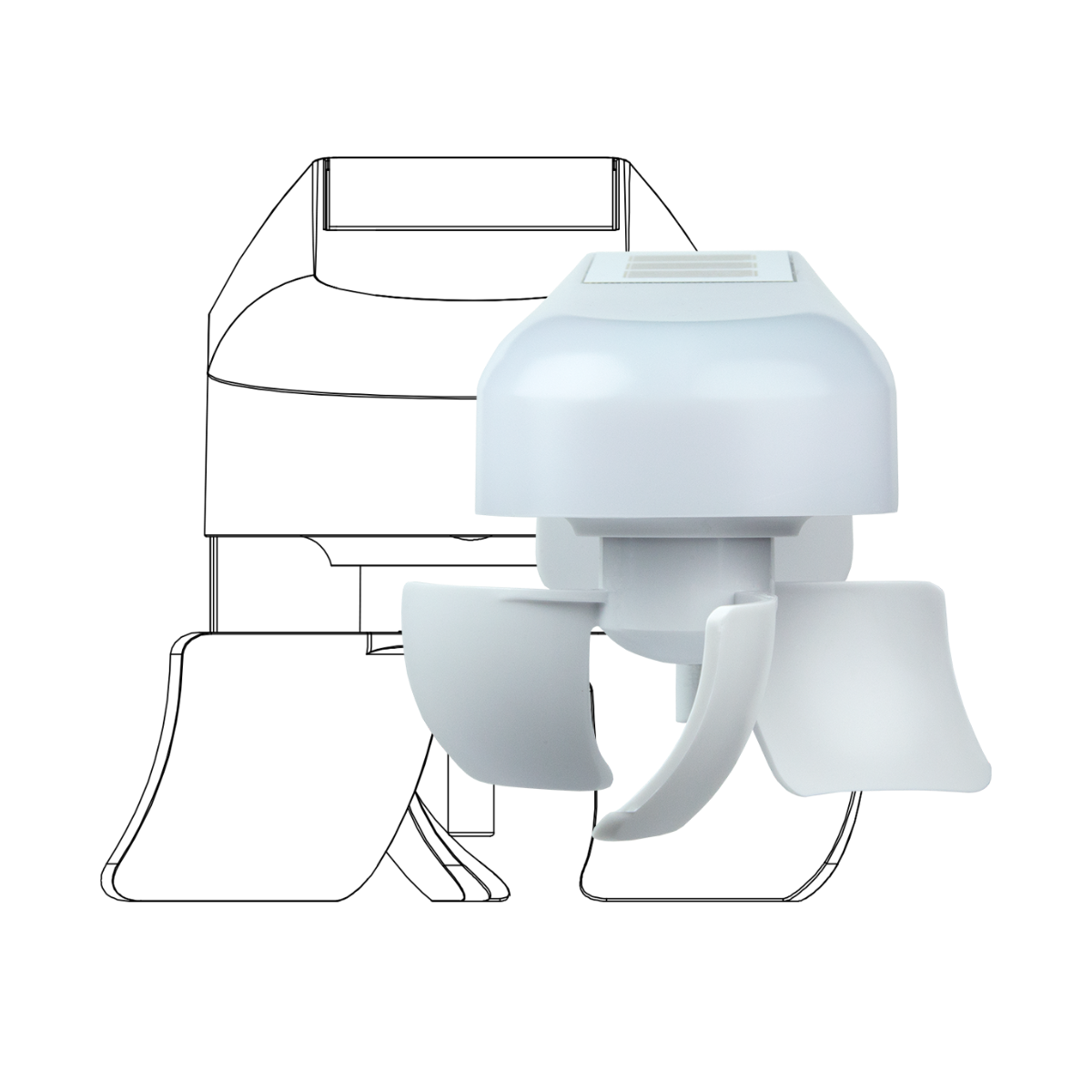
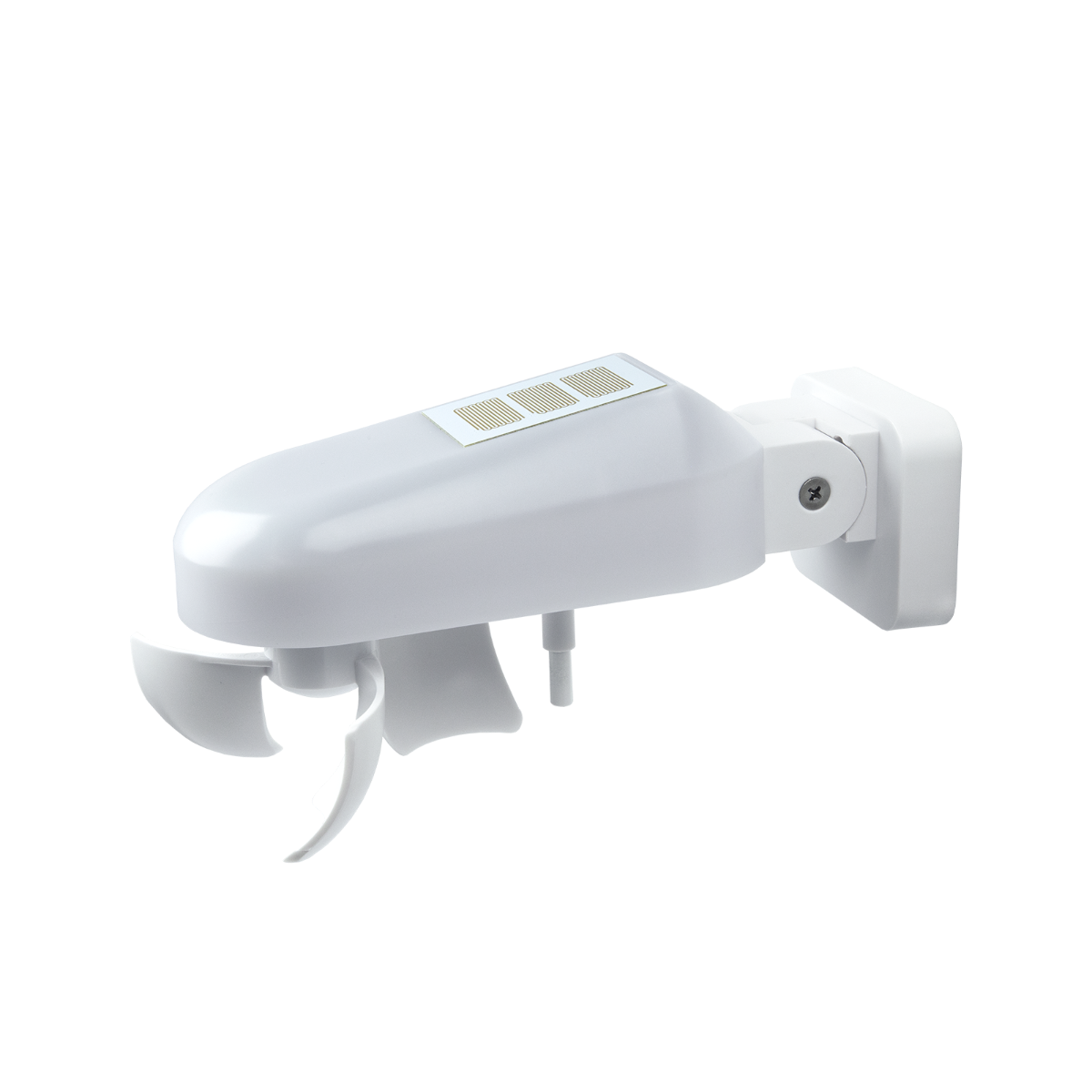
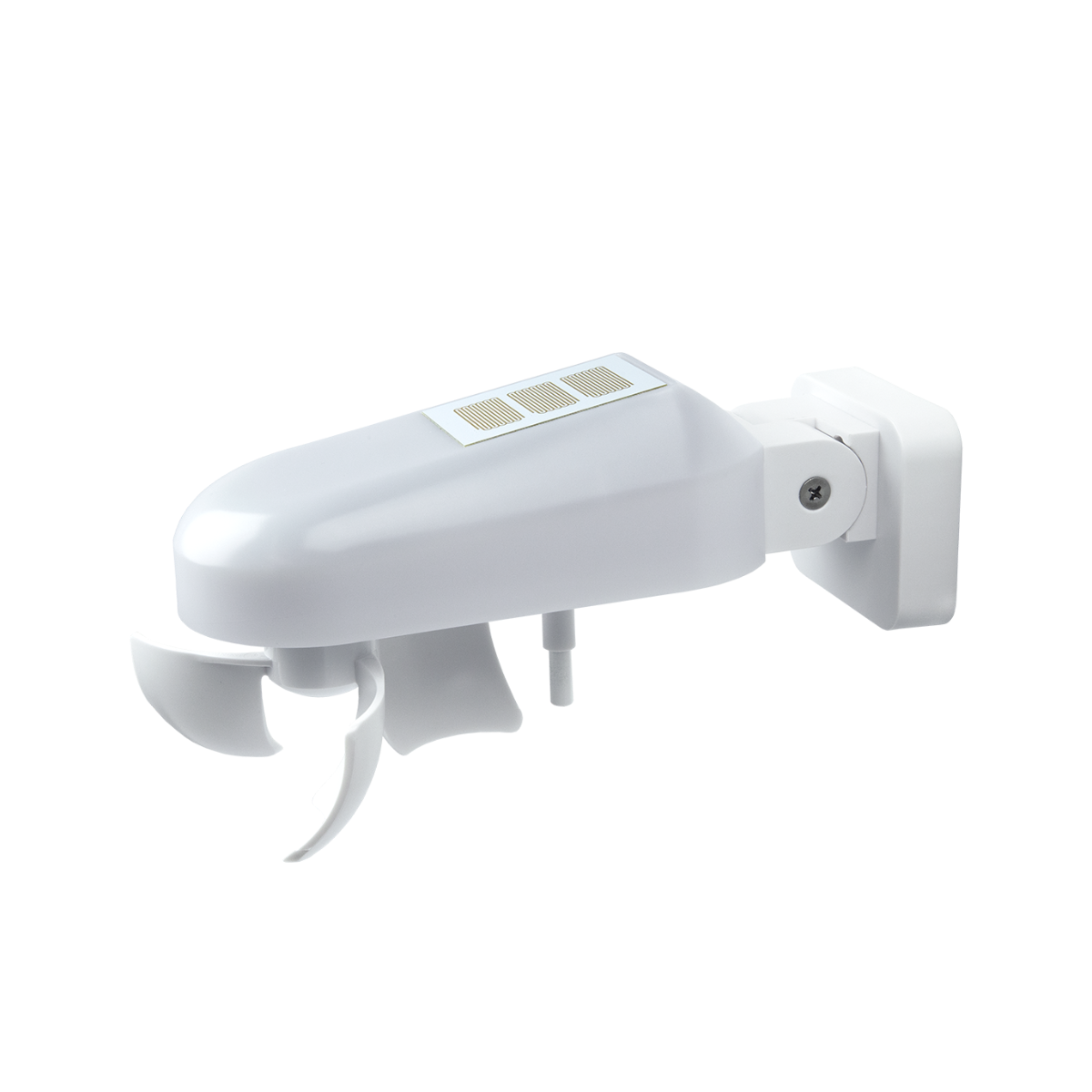
The compact housing of the Windancer 2.0 GPS KNX sec contains the sensors, the signal processing electronics and the electronics for bus connectivity.
The mechanical cup anemometer has proven itself over many years and ensures reliable wind measurement in residential buildings. Designed for long-term outdoor use, the measuring system has been tested in a wind tunnel at speeds of up to 200 km/h.
The KNX weather station with GPS detects wind from all directions and triggers a wind alarm if wind speeds are too high.
The integrated heated rain sensor complements the protective functions and ensures reliable precipitation detection even in winter conditions, in the presence of dew and fog.


Windancer 2.0 GPS KNX
KNX weather station with automatic shading control and timer functions
Windancer 2.0 GPS KNX sec collects weather and outdoor data directly from the building and makes it available for functions within the KNX system. This includes
- Brightness
- Wind speed
- Precipitation
- Outdoor temperature
- GPS signal for time and location
- Sun position (direction and altitude)
Thanks to the integrated sun position-dependent shading control, blinds, roller shutters and awnings are adjusted depending on the brightness and the actual position of the sun. There are various automatic movement positions depending on the light curve. Venetian blinds are even adjusted to the exact angle via slat tracking and shadow edge tracking to reduce direct sunlight whilst maintaining daylight in the room.
The shading functions can be precisely adapted to different sides of the building via 8 separate façade channels. The protection functions – wind alarm, rain detection, frost protection and heat protection – are configured in the application and applied to the desired facades.
The weekly and calendar timers complement the automation with scheduled operations. All weather data and threshold values can also be flexibly utilised for further automation and protection functions within the KNX system.
Windancer 2.0 KNX sec
Weather data and logic modules for the KNX system
Even the version without a GPS receiver records the weather data: brightness (separately for east/south/west), wind speed, precipitation and outdoor temperature. This device has no internal automatic or timing functions.
With Windancer 2.0 KNX sec, measurement values and thresholds are available for further processing by other devices in the KNX system. A typical example: the advanced sun protection automation is handled by the blind actuator.
Nevertheless, using the brightness thresholds, the associated switching outputs and the integrated logic modules, it is possible to implement a simple, threshold-based roller shutter and blind control system. For each sun direction (east/south/west), there are four brightness thresholds which can be linked via the device’s logic, e.g. to the outdoor temperature (frost protection). This logic output can then be used in the KNX system for movement commands.
Windancer 2.0 GPS KNX sec in use
Typical applications in the KNX system
Windancer 2.0 GPS KNX sec is suitable for the following application scenarios, amongst others:
- GPS-assisted, sun-position-dependent shading of up to eight façades
- Wind alarm for automatic blind control and weather-dependent protection functions for awnings and roller shutters,
- rain monitoring for sensitive coverings such as awnings and for skylights,
- frost protection and temperature-dependent automations for shading and other functions within the KNX system,
- time-controlled automations via integrated weekly and calendar timers,
- linking of weather data via integrated AND and OR logic for custom control scenarios
Windancer weather stations & accessories in the online shop
Windancer 2.0 GPS KNX sec
The right appliance for a family house
The Windancer 2.0 GPS KNX sec has been specifically developed to meet the requirements of modern single-family homes. The focus is not on providing as many façade channels as possible or on technically complex measurement methods, but rather on a reliable and practical KNX weather station for residential buildings.
Requirements in single-family homes for which the Windancer 2.0 GPS KNX sec is tailored:
- automatic shading control for typical residential facades
- wind alarm, rain monitoring and frost protection integrated into a single device
- robust wind and rain detection for long-term outdoor use
- efficient project planning thanks to the revised ETS application
- reliable KNX automation without unnecessary additional devices or system complexity
For projects with different technical requirements, particularly regarding wind measurement, Elsner Elektronik’s weather station portfolio offers suitable alternatives – ranging from electronic wind measurement for larger residential and commercial construction projects to ultrasonic solutions with wind direction detection for complex large-scale developments.
Understanding shading functions in the ETS
Example use in the ETS
The KNX sample project uses typical applications to demonstrate how weather data, shading functions and actuators interact within the KNX system. This makes it easy to see how blinds, roller shutters or awnings can react automatically depending on the position of the sun, wind or rainfall.
Functions such as wind alarms, sun-position-dependent shading or weather-dependent protection functions are also already set up, making it easier to get started with project planning.
This makes the example project suitable not only for testing individual functions, but also as a practical basis for your own KNX projects and commissioning.


Frequently Asked Questions
FAQ on Windancer 2.0 GPS KNX sec
How many façades can be controlled using Windancer 2.0 GPS KNX sec?
Windancer 2.0 GPS KNX sec enables the control of shading for up to eight façades, making it well-suited for single-family homes and other small residential and commercial properties. Additional façades can be added using further weather stations or shading components such as BX8 KNX.
For which projects are more than eight façade channels advisable?
Eight façade channels fully cover the requirements of most single-family homes – even with spacious floor plans featuring bay windows, garages or terraces. More channels are not a sign of higher quality, but rather an indicator of a different project segment: multi-family homes, commercial properties or large-scale projects with complex façade structures. Those planning in this area will find suitable solutions with Suntracer KNX sl or Suntracer KNX pro.
Does Windancer 2.0 GPS KNX sec need to be south-facing?
The GPS version automatically calculates the sun’s position based on location and time. This means that a traditional south-facing orientation is not required for façade control. Nevertheless, the weather station must be positioned so that the sun sensors can detect brightness from all directions of the façade. Depending on the building’s geometry, a south-facing orientation may be optimal, or another direction may be required, e.g. for north-facing glazing, a conservatory or a stepped façade.
Can weather data also be used for functions other than shading?
Yes. Within the KNX system, the weather data is flexibly available for other functions, such as ventilation control, window automation, temperature-dependent functions or weather-dependent protection functions. In addition, the integrated weekly and calendar timer enables time-controlled automation independent of weather data.
Can wind limit values be adopted directly during commissioning?
Yes. With the Live Data Adjustment function, current wind, temperature or brightness values can be adopted directly as limit values. This simplifies parameterisation and adaptation to individual user requirements.
What advantages does the revised ETS application offer in day-to-day project work?
The new ETS structure makes it easier to navigate the parameterisation. Extensive context help and semantic assignments reduce the effort required for project planning and commissioning.
Can wind measurements be displayed in different units?
Yes. Wind measurements can be displayed in m/s, km/h or Beaufort.
When should I use the Windancer model with GPS and when the model without GPS?
Windancer 2.0 GPS KNX sec is suitable for projects requiring sun-position-dependent shading, blind tracking and shadow edge control. The weather station calculates the sun’s position based on location and time, thereby enabling particularly precise automatic shading. The Windancer version without GPS controls shading via brightness thresholds for each compass direction and is suitable for applications where control based on the sun’s position is not required.
Why is wind speed measured mechanically?
The cup anemometer is a tried-and-tested choice for single-family homes. It is well suited to detecting crosswinds and reliably triggering wind alarms and protection functions.
In other building situations, e.g. multi-storey houses, densely built-up areas, on slopes, with unusual roof geometries or in conservatories, other measurement methods demonstrate their strengths. Elsner Elektronik offers the ideal weather station for every application – with mechanical, electronic or ultrasonic wind measurement. More about choosing the right weather station.


Author: Elsner Elektronik Editorial Team | Last updated: 06/2026
```html
```